Key Takeaways
- Location determines both present comfort and future value, making it the top criterion in real estate purchases.
- A home’s size and layout should suit your lifestyle, not just the listing description.
- Energy efficiency, modern upgrades, and smart features can save you money and boost long-term appeal.
- Professional appraisals and intelligent use of online tools provide thorough, unbiased property evaluations.
Table of Contents
- Location: The Prime Factor
- Size and Layout: Beyond Square Footage
- Upgrades and Renovations: Adding Value
- Energy Efficiency and Smart Technology
- Market Conditions: Timing Your Purchase
- Professional Appraisals: Getting an Expert Opinion
- Online Tools: Leveraging Technology
- Conclusion
Finding the right home can be one of the most significant and exciting decisions you’ll ever make, but with so many choices, it’s easy to feel overwhelmed by all the details and features on the market. Figuring out how to compare homes for sale effectively is essential for buyers who want to maximize their investment and find a property that truly meets their needs. Working with an experienced local agent, such as Georgetown DC real estate agent Russell Firestone, can ensure you have professional guidance every step of the way.
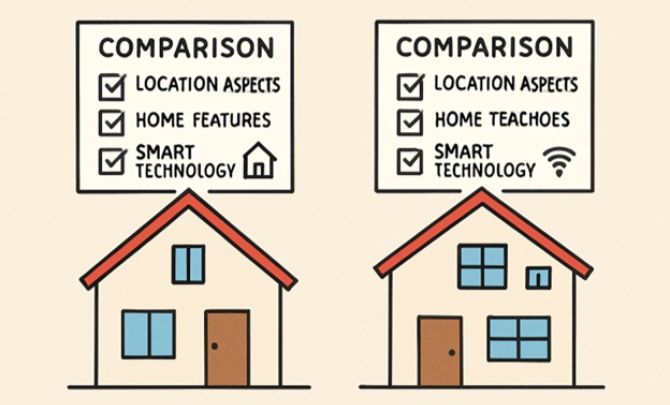
To make your search less daunting and more productive, this guide spotlights the factors that matter most—from the timeless rule of “location, location, location” to more modern priorities like energy efficiency and smart home technology. Whether you’re a seasoned buyer or a first-time house hunter, focusing on these fundamentals can help you confidently narrow down your options and identify the best fit for your lifestyle and budget. The process of evaluating homes isn’t just about comparing square footage or counting bedrooms. It’s about understanding which features contribute lasting value, how market forces play a role, and the ways technology and expert insights can assist you in making the right choice.
In this article, we’ll walk you through every critical aspect to consider before signing on the dotted line. Armed with this knowledge, you’ll be well-prepared to make smart decisions and avoid common pitfalls that often trip up homebuyers. Let’s dive into how you can compare homes for sale the right way and ultimately find your perfect place to call home.
Location: The Prime Factor
Among all the factors that affect property value and livability, location remains the most important. A property’s proximity to essential amenities—including commuting routes, parks, shopping areas, and reputable schools—can dramatically influence convenience and quality of life. Neighborhood amenities and the local economy are consistently linked to higher real estate appreciation rates. For instance, data from ATTOM shows homes located near sought-after grocery chains like Trader Joe’s often exhibit higher values and greater appreciation. Additionally, low-crime neighborhoods and walkable environments are in high demand, making these locations more resilient to market volatility over time.
Size and Layout: Beyond Square Footage
While bigger homes may seem more appealing on paper, it’s crucial to look beyond raw square footage and examine layout efficiency. Open floor plans with flexible living spaces, well-placed bedrooms, and modern kitchens can significantly enhance functionality—even in smaller homes. Features like finished basements, dedicated workspaces, or outdoor areas can also add usable space and value. It’s important to prioritize homes where the available space supports your daily routines and future plans. For example, a large, isolated dining room may be less useful than a modest but open kitchen that flows into a comfortable living space. Comparing floor plans and imagining yourself living in each environment can help you identify the best option for your needs.
Upgrades and Renovations: Adding Value
Modern upgrades—such as updated kitchens, spa-inspired bathrooms, and energy-smart appliances—can significantly improve home value and livability. Materials like hardwood flooring, quartz countertops, and custom cabinetry are especially desirable. However, not every renovation pays off equally. It’s wise to prioritize improvements that align with current market trends and will likely appeal to future buyers as well as yourself. If you’re comparing two otherwise similar homes, the quality and consistency of finishes can be a deciding factor. Consulting market reports or talking to real estate professionals can help you understand which upgrades deliver the best returns in your specific location.
Energy Efficiency and Smart Technology
Homes equipped with solar panels, high-efficiency HVAC systems, or smart home features are increasingly popular among today’s buyers. Not only do these features help reduce monthly utility costs, but they can also boost long-term resale value. As sustainability grows in importance, properties with robust energy efficiencies—certified by programs like Energy Star or LEED—tend to stand out in competitive markets. Even small elements such as programmable thermostats, energy-efficient windows, or water-saving fixtures can attract buyers who are focused on cutting costs and reducing environmental impact.
Market Conditions: Timing Your Purchase
Understanding local and national real estate trends plays a key role in ensuring you don’t overpay or miss out on a great opportunity. For example, in June 2024, buyers benefited from the highest housing inventory in four years, which eased competition and improved choices. Tracking inventory volumes, median sales prices, and mortgage rates will give you insight into when it’s the right time to buy—or whether you should wait for conditions to shift in your favor.
Professional Appraisals: Getting an Expert Opinion
When you’re close to making an offer, hiring a certified appraiser provides an objective evaluation of your selected property. An appraisal considers comparable sales, property conditions, and local market factors, ensuring you don’t pay more than a home is worth. Lenders typically require appraisals to confirm loan security, but buyers can also benefit from this additional layer of protection, especially in competitive or rapidly changing markets.
Online Tools: Leveraging Technology
Numerous online resources make starting your home comparison process easier than ever. Automated valuation models, such as Zillow’s Zestimate or Redfin’s home value estimator, give you a quick snapshot of a property’s worth based on current market data and trends. While these estimates can’t replace an in-person visit or professional appraisal, they provide a useful baseline and allow you to track pricing shifts in your target neighborhood. Use online mapping and school rating platforms as additional research tools. These extras help provide a broader context around each home you’re considering and ensure no surprises after closing.
Conclusion
Comparing homes for sale is far more nuanced than simply looking at list prices. Focusing on location, functional layouts, quality upgrades, and energy-efficient amenities gives you the best chance at a smart investment. Paying attention to market conditions, leveraging professional opinions, and using cutting-edge online tools can further refine your search and help you make a lasting impact. By paying attention to what matters, you’ll find a home that fits your current needs and future aspirations.
