Men’s hair restoration includes surgical and non-surgical treatments that help address thinning hair, receding hairlines, and baldness. Some treatments slow hair loss, while others move healthy follicles to areas with little or no hair.
The best approach depends on your age, hair loss pattern, donor hair supply, and personal goals. Understanding your options can help you choose a treatment that delivers natural-looking results.
What Causes Hair Loss in Men?
Hair loss in men often results from androgenetic alopecia, also known as male pattern baldness. This hereditary condition makes certain hair follicles sensitive to dihydrotestosterone (DHT), a hormone that causes them to shrink.
Over time, affected follicles produce thinner, shorter hair until growth may stop completely.
Common signs include:
- A receding hairline around the temples.
- Gradual thinning near the crown.
- Less coverage or a growing bald spot.
Other causes include medical conditions, hormonal changes, stress, and certain medications. A specialist can examine your scalp and medical history to identify the cause before recommending treatment.
What Are the Best Men’s Hair Restoration Options?
Male hair restoration offers several treatment options, from prescription medications to hair transplant surgery. Some methods protect existing hair, while others restore coverage where thinning is significant.
Your doctor will recommend an approach based on your hair loss, scalp health, and expected results.
Non-Surgical Hair Restoration Treatments
Non-surgical treatments may slow thinning and encourage hair growth without surgery. They often work best when follicles are still active, and hair loss is less advanced.
Common treatments include:
- Minoxidil: A topical medication that may support regrowth and reduce thinning.
- Finasteride: A prescription medication that lowers DHT levels and helps prevent further hair loss.
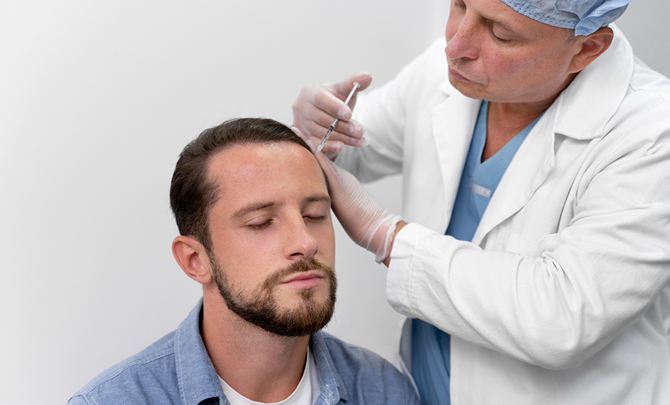
- Platelet-rich plasma (PRP): Injections using components of your blood that may encourage growth, although results vary.
These treatments usually require ongoing care to maintain results. Possible side effects include scalp irritation from minoxidil and sexual side effects from finasteride.
Hair Transplant Techniques for Men
Modern hair transplants for men move healthy follicles from thicker areas of the scalp to areas with less coverage. Transplanted hair can keep growing after the grafts heal.
Surgeons mainly use two techniques, each with different benefits and scarring patterns.
Follicular Unit Extraction (FUE)
Follicular unit extraction FUE removes individual groups of follicles from the donor area, usually the back of the head. The surgeon places these grafts into thinning areas to create a natural hairline.
FUE leaves small, scattered scars instead of one long scar.
Follicular Unit Transplantation (FUT)
FUT removes a thin strip of scalp containing healthy follicles. The surgeon divides the strip into smaller grafts before placing them in the treatment area. This method leaves a linear scar at the donor site but may suit patients needing many grafts.
Who Is a Good Candidate for Hair Restoration?
Good candidates generally have enough healthy donor hair, predictable thinning patterns, and realistic goals. Hair implants for men depend on the available donor supply because surgery cannot create new follicles.
Patients with active scalp conditions or widespread thinning may need other treatments first.
During a consultation, specialists such as Dr. Ross Kopelman examine your scalp, hair quality, and risk of future hair loss.
A qualified plastic surgeon or hair transplant specialist should explain the benefits and limits of surgery. You should also check whether your physician is board-certified in a relevant specialty.
What Happens During Hair Transplant Surgery?
Hair transplant procedures usually involve local anesthesia, removing grafts, and carefully placing them in thinning areas. A men’s hair transplant session may take several hours, depending on how many grafts you need.
Your surgeon plans the hairline and graft placement to match your natural growth pattern.
The process typically includes:
- Examining your scalp and planning the new hairline.
- Removing healthy follicles from the donor area.
- Preparing and placing grafts into thinning areas.
- Explaining aftercare instructions and scheduling follow-up visits.
Most hair transplant surgeries let patients go home the same day. Following your surgeon’s instructions helps protect the grafts and supports proper healing.
Recovery, Results, and Possible Risks
Most patients experience mild swelling, redness, or scabbing during the first several days. Newly transplanted hair often sheds before new growth starts around three to four months.
Results become more visible after six to nine months, with further improvement around twelve months or longer.
Possible risks include infection, bleeding, scarring, uneven hair density, and poor graft survival. Long-term results also depend on whether untreated hair continues thinning.
Regular follow-up visits and medical treatments may help maintain a consistent appearance.
How Much Does Hair Restoration Cost?
Costs depend on the technique, number of grafts, surgeon’s experience, and clinic location. At Kopelman Hair Restoration, FUE typically costs $25,000 to $40,000, while no-shave FUE ranges from $30,000 to $40,000.
Your final price depends on your needs and the treatment plan.
When comparing clinics, review surgeon qualifications, patient photographs, treatment details, and aftercare services. A good hair restoration plan should protect your donor supply and support natural-looking results.
